30th EHA Congress Travel Award 受賞レポート 渡邊 瑞希
 jsh-izawa
名前:渡邊 瑞希【国立がん研究センター中央病院造血幹細胞移植科/遺伝診療部門】
発表形式:Poster
Title:
Management of patients with hematological disorders with germline predispositions in Japan
Authors:
Mizuki Watanabe1,2,3, Junya Kanda1, Hidenori Kawasaki4, Senji Kasahara5, Nobuhiro Kanemura6, Norihiro Hiramoto7, Kensuke Usuki8, Kazunori Imada9, Yasunori Ueda10, Kinuko Mitani11, Tosiyuki Kitano12, Yasushi Sawayama13, Uoshima Nobuhiko14, Shigeo Fuji15, Seishi Ogawa16, Akifumi Takaori1, Yasuhito Nannya17
Affiliations:
1. Department Hematology, Kyoto University Hospital, Kyoto, Japan
2. Div. Stem Cell Transplantation, National Cancer Center Hospital, Tokyo, Japan
3. Clinical Genetics Unit, National Cancer Center Hospital, Tokyo, Japan
4. Clinical Genetics Unit, Kyoto University Hospital, Kyoto, Japan
5. Department of Hematology, Gifu Municipal Hospital, Gifu, Japan
6. Department Hematology and Infectious Disease, Gifu University Hospital, Gifu, Japan
7. Department Hematology, Kobe City Medical Center General Hospital, Kobe, Japan
8. Department of Hematology, NTT Medical Center Tokyo, Tokyo, Japan
9. Department of Hematology, Japanese Red Cross Osaka Hospital, Osaka, Japan
10. Department of Hematology, Kurashiki Central Hospital, Kurashiki, Japan,
11. Department of Hematology and Oncology, Dokkyo Medical University, Tochigi, Japan
12. Department of Hematology, Kitano Hospital, Osaka, Japan
13. Department of Hematology, Sasebo City General Hospital, Sasebo, Japan
14. Department Hematology, Japanese Red Cross Kyoto Daini Hospital, Kyoto, Japan
15. Department of Hematology, Osaka International Cancer Institute, Osaka, Japan
16. Department Pathology and Tumor Biology, Kyoto University, Kyoto, Japan
17. Department Hematology/Oncology, Institute of Medical Science, The University of Tokyo, Tokyo, Japan
Abstract:
Background: Recent advances in clinical sequencing have revealed predisposed germline mutations as primary and secondary findings in patients with hematological disorders. Although therapeutic strategies for myeloid neoplasms which has developed in these patients with the latent susceptibility to solid tumors or hematological malignancies should be examined with cautions, the prevalence of these predisposed germline mutations in the adult patients as has not yet been comprehensively understood. Hence, we report the frequency of germline mutations in the known genes responsible for inherited diseases in Japanese adult patients with myeloid neoplasms.
Patients and Methods: Genomic variants of 14 genes (DDX41, RUNX1, ETV6, CEBPA, GATA2, SRP72, TERT, TP53, RET, WT1, BRCA1, BRCA2, RB1, NF2) in tumor specimens with hematological disorders from 12 hospitals were investigated by next-generation sequencing, followed by confirmatory testing using buccal specimens in cases with suspected germline mutations (variant allele frequency >0.35). Clinical data were collected from patients positive for pathogenic/likely pathogenic variants in confirmatory testing, with proband/family notification attempted in appropriate cases. Clinical data were also collected in those with variants of uncertain significance (VUS) to assess the pathogenicity of the VUS.
Results: Of the 2976 cases, 374 underwent confirmatory testing. Germline mutations with pathogenicity were confirmed in 84 (DDX41: n=57, RUNX1: n=10, CEBPA: n=1, GATA2: n=3, TP53: n=4, BRCA2; n=9) and 79 had VUS. Clinical data were collected from 81 patients with pathogenic variants, 13 of whom had a family history of myeloid neoplasms, and 73 patients with VUS, all of whom had no clear family history. Fifty patients had acute myeloid leukemia, 69 had myelodysplastic syndrome, and 30 had other myeloid disorders, including anaplastic anemia, bone marrow failure, and idiopathic cytopenia of undetermined significance. Among patients with pathogenic variants, 20 received allogeneic hematopoietic stem cell transplantation (allo-HSCT), all from unrelated donors. Solid tumors prior to hematologic disorders were observed in 6 (breast cancer: n=3, esophageal and pharyngeal cancer: n=1, ovarian tumor: n=2). No clinical features typical of Li-Fraumeni syndrome were reported in cases with suspected germline TP53 mutations. Disclosure to proband/family was considered applicable in 40 cases (already performed: n=14; in preparation, n=26) and inapplicable in 37 cases due to proband's wishes/deaths and the institution situation.
Conclusion: Our analysis suggests that the expanded use of panel sequencing has the potential to uncover an increasing number of germline findings, not only in hematologic disorders, but also in solid tumors. The donor selection process in allo-HSCT as well as the sampling methods in confirmatory testing for patients with germline predisposition to myeloid neoplasms such as in DDX41, RUNX1 and GATA2 should be further discussed from a therapeutic and ethical point of view. In addition, the latent risk of cytotoxic chemotherapy/radiotherapy to patients with hereditary solid tumors such as in HBOC and LFS should be further investigated. It's an urgent issue for hematologists to collect data of these cases to grasp their national/international perspective and to develop a system to manage/support the patients and their families, under mutual corporation with the divisions of clinical genetics.
EHA2025参加レポート
JSH-EHA Travel Grant Program for EHA2025のご支援をいただき、EHA2025 Annual Congressに現地参加の機会を得ました。ちょうど本邦で造血器疾患に対する遺伝子解析が保険適用として開始された時期と重なり、研究テーマである遺伝性造血器疾患に関連する発表を中心に最新の知見を学ぶことができ、大変有意義な学会参加となりました。
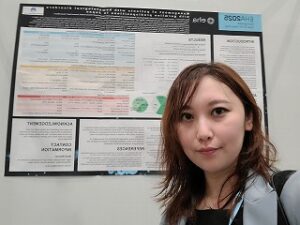
私は、全国12施設の成人(17歳以上)における日本人造血器疾患患者を対象に、生殖細胞系変異及びその開示に関するデータを収集し、結果をポスターとして発表して参りました。今後germline predisposition to myeloid neoplasmやinherited cancer syndromeに関連する生殖細胞系列変異の同定の急速な増加が見込まれていますが、これらの症例の臨床情報及び遺伝診療に関するデータ蓄積は未だ不十分です。本研究では、2976例中374例で口腔粘膜擦過検体を用いた生殖細胞系列変異に関する確認検査を行い、84例で病的/疑わしい病的な生殖細胞系列変異(内訳:DDX41:57, RUNX1:10, CEBPA:1, GATA2:3, TP53:4, BRCA2:9)を確認しました。病的変異例81人のうち13人には骨髄腫瘍の家族歴を認め、20人が同種造血幹細胞移植を受け、うち1人は血縁者間移植後にドナー由来白血病を発症しました。TP53変異を有する4例においてはLi Fraumeni症候群特有の臨床像は確認されませんでした。患者及び家族に対する結果開示は40例で実施/準備され、37例では患者意思や死亡、施設の都合で実施ができませんでした。造血器疾患患者の遺伝子解析の結果、血液腫瘍だけでなく固形腫瘍の素因となる生殖細胞系列変異の同定が増える可能性に加え、擬陽性の可能性の検討も重要である点も示唆された本研究はその重要性を再認識させるものであり、遺伝学的検査に関わる擬陽性の検討や、ドナー選択・確認検査のプロセス、患者・家族への情報提供体制の整備は引き続き喫緊の課題と考えられます。
会期中は同様のテーマに関するセッションに積極的に参加しましたが、特に、生殖細胞系列変異に関するシンポジウムでは症例ベースの積極的なディスカッションを聴くことができ、非常に刺激的でした。遺伝子解析結果の蓄積が進んでいる欧米では、生殖細胞系列変異に関して遺伝診療部門との情報共有や血液診療における解析、それに基づいたガイドライン作成が本邦に先駆けて進められている一方で、ドナー選択や治療方針の決定に関しては欧州においても標準化には至っておらず、現場では多くの試行錯誤があることも理解できた点は貴重な学びでした。
私の発表に対しても多数の研究者から関心を寄せていただき、この分野が今後さらに議論と検討を要する重要領域であることを感じております。実際に今後の国際共同研究につながるコネクションが得られたことも非常に有難い機会であり、本プログラムによって得られた現地参加の経験を通じて、オンラインでは得難い”face to face”の学びとつながりの大切さを痛感いたしました。本プログラムが今後も若手研究者の国際的挑戦を支える貴重な機会として継続されることを、心より願っております。
この場をお借りして、ご支援をいただいたJSHおよび関係諸先生方、共同研究者として貴重な知見をいただいた研究参加施設の先生方に、改めて深く御礼申し上げます。