30th EHA Congress Travel Award 受賞レポート 貫井 友貴
 jsh-izawa
名前:貫井 友貴【金沢大学医薬保健研究域医学系血液内科学】
発表形式:Poster
Title:
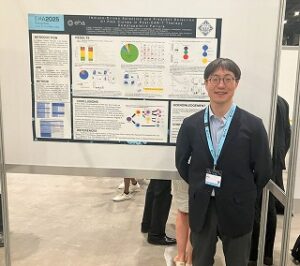
Immune-driven selection and frequent detection of PNH clones in post-CAR-T therapy hematopoietic failure
Authors:
Yuki Nukii1, Kohei Hosokawa1, Akiyo Yoshida2, Tatsuya Hatada1, Shun Fujii1, Takumi Kimura1, Satoomi Sakai1, Hayato Kawashima1, Hiroki Yoshino1, Daiki Higashi1, Shunichiro Nakagawa1, Anna Hiratsuka1, Hiroki Mura1, Shinya Yamada1, Erika Matsuura2, Takeshi Yoroidaka1, Tatsuya Imi1, Hiroyuki Maruyama1, Hirohito Yamazaki3, Shinji Nakao1,and Toshihiro Miyamoto1
Affiliations:
1. Department of Hematology, Faculty of Medicine, Institute of Medical Pharmaceutical and Health Sciences, Kanazawa University, Kanazawa, Japan
2. Division of Transfusion Medicine, Kanazawa University Hospital, Kanazawa, Japan
3. Division of Medical Safety, Kanazawa University Hospital, Kanazawa, Japan
Abstract:
Background: In Chimeric Antigen Receptor T-cell therapy (CAR-T therapy) for B-cell lymphoma and multiple myeloma, post-infusion cytopenia is a clinically significant issue and a major cause of non-relapse mortality. In hematopoietic failure following CAR-T therapy, PNH-type blood cells—characterized by the absence of GPI-anchored proteins and observed in immune-mediated bone marrow (BM) failure, such as aplastic anemia—are frequently detected (Yoshihara et al., 2021). However, the pathophysiology and clinical significance of this finding remain unclear.
Aims: This study investigated the relationship between post-CAR-T therapy transition in blood cell count and the detection of PNH-type blood cells in patients treated with CAR-T therapy.
Methods: Between 2022 and 2025, 41 patients with hematologic malignancies (32 with B-cell lymphoma, 8 with multiple myeloma, and 1 with acute lymphoblastic leukemia) who received CAR-T therapy at our hospital were analyzed for PNH-type blood cells using high-sensitivity flow cytometry developed in our department. Clinical significance was compared with and without PNH-type blood cells.
Results: Regarding changing blood cell count after infusion, among the 41 cases, 9 showed quick recovery, 21 exhibited intermittent recovery, and 9 demonstrated an aplastic pattern—continuous severe neutropenia (ANC<500 cells per μL) for ≧14 days of cytopenia. PNH-type granulocytes, measured post-infusion (median: 22 days), were proved to be positive in 34 of 41 cases (82.9%) with a median percentage of 0.0095% (range: 0.003%–0.143%).In contrast, PNH-type erythrocytes were positive in 4 of 41 cases (9.8%), with a median percentage of 0.012% (range: 0.009%–0.017%). Analysis of blood lineages in PNH-positive cases, including monocytes, T/B/NK lymphocytes, and platelets, revealed that PNH cells were detected in granulocytes alone in 79.4%, in granulocytes and monocytes in 11.8%, in granulocytes and erythrocytes in 5.9%, and in granulocytes, monocytes, and erythrocytes in 2.9%. To address the origin of PNH-type blood cells, analysis of hematopoietic stem and progenitor cells in the BM showed that PNH-type blood cells were observed exclusively in the GMP fraction; not in the HSC, CLP, CMP, MEP.
In 24 cases which pre- and post-CAR-T cell infusion comparisons could be evaluated, an expansion of the PNH-type granulocyte clone size was observed after infusion (pre-infusion median: 0.002% vs post-infusion median: 0.009%, p<0.05). Among the 21 cases evaluated more than six months post-infusion, PNH-type blood cells persisted in 17 cases and disappeared in 4 cases. None of these cases showed clinical progression to PNH. Regarding the correlation between the presence of PNH-type blood cells and cytopenia, no significant difference was observed in neutropenia. However, PNH-positive cases tended to exhibit a deeper nadir in late-onset thrombocytopenia (second dip). No correlation was found between PNH-type blood cells and IL-6. Currently, we are attempting to identify the immunological mechanisms affecting the expansion of PNH clones by performing peripheral blood single-cell RNA sequencing from PNH-positive and PNH-negative cases.
Summary/Conclusion: This study demonstrated that PNH-type blood cells are frequently detected in patients following CAR-T therapy, similar to immune-mediated BM failure. This phenomenon may involve the immunological selection of PNH clones due to CAR-T cell or non-CAR-T cell activation or the effects of hematopoietic-suppressive cytokines. Further investigation into mechanisms of hematopoietic dysfunction is expected to facilitate the development of new approaches, such as immunosuppressive therapy or hematopoietic growth factor receptor agonists.
EHA2025参加レポート
この度はJSH-EHA Travel Grant Program for EHA2025を授与いただき、誠にありがとうございました。
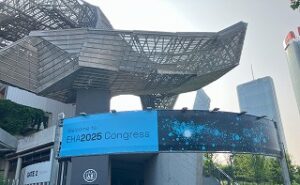
今回2025 EHA congressはイタリアのミラノで開催されました。会期中は連日最高気温30度以上の暑さと強烈な日差しが続き、日中外に出ると灼熱のような感覚を味わいました。
会場のミラノコンベンションセンターは非常に大きな会場で、その中に多くの参加者が集っており、EHAの熱量の大きさに圧倒されました。
ヨーロッパの学会への参加は昨今の物価高騰の影響から経済的な障壁が高くなっており、今回ご支援を頂けたことは本当にありがたかったです。
教育講演ではその分野のエキスパートが最先端の研究成果や臨床研究の結果を報告して紹介しており、とても刺激を受ける内容でした。また質疑応答では各国から鋭い質問が次々と飛んでおり、リモートではこの空気は決して体感できなかったであろうことから、改めて現地に参加できたことの価値を感じました。
Young EHA research meetingというセッションでは最新の研究内容が豊富な情報量で報告されておりました。研究内容もさることながら、プレゼンテーションの能力も皆様非常に高く、自分に不足している能力をまざまざと思い知ることとなりました。そのあとに続いて行われたYoung EHA MixerというEHAの若手のメンバーが交流する会に、私たちJSHからのgrant受賞者も招待いただきました。会場は非常に和やかな雰囲気で、多くの先生方から私たちにお声掛けを頂きとても楽しく刺激を受ける時間を過ごさせていただきました。
私は今回ポスター発表で採択いただきました。ポスターセッションは3日目となる土曜日の夜で、時間になると多くの人がつめかけ、各ポスターを真剣な表情で見つめ、活発なディスカッションが行われました。私の発表にも様々な質問を投げかけていただき、何とか自分の考えを簡潔かつ的確に伝えられるよう努めました。国際学会で発表することは私にとって今回が初めてであり、至らぬ点も多くあったかとは思いますが非常に意義のある経験をさせていただいたと思います。
本学会で私はCAR-T細胞療法後の患者におけるPNH型血球の解析について報告しました。CAR-T細胞療法は近年造血器腫瘍の治療において革新的な治療効果を挙げていますが、有害事象として輸注後の造血不全が知られており、そのメカニズムについてはまだ解明されておりません。一方、免疫性骨髄不全に関連するPNH型血球がCAR-T細胞療法後に高頻度に検出されることが報告されていることから、今回私たちは当院でのCAR-T細胞療法後患者のPNH型血球を輸注前も含め経時的に評価しました。さらに骨髄を含めた各血球分化段階のPNH型血球を解析しました。注目すべきことに、PNH型血球は顆粒球・単球系に選択的に検出され、輸注後にPNH型顆粒球が拡大することが明らかになりました。骨髄では骨髄幹・前駆細胞、特にGMP分画に検出されることが判明しました。この解析結果からは、CAR-T細胞療法後PNH型血球が生存優位性を獲得するような免疫学的病態が骨髄で生じており、それが輸注後の造血不全の原因となっていることが示唆されます。今後もさらなる詳細な機序の解明を進めることで、造血不全の新たな治療法の確立に寄与しCAR-T細胞療法の安全性をより高めることを目指しております。
最後になりますが、今回このような素晴らしい機会をいただき、日本血液学会事務局の皆様、選考委員会、国際委員会の先生方に御礼申し上げます。そして日頃より研究のご指導をいただいています宮本敏浩先生、細川晃平先生、研究に協力してくださった臨床医の先生方に心から感謝いたします。