30th EHA Congress Travel Award 受賞レポート 加登 翔太
 jsh-izawa
名前:加登 翔太【東京大学小児科】
発表形式:Poster
Title:
Integrated genome and epigenome profiling of pediatric leukemia using nanopore-based targeted adaptive sampling long-read sequencing
Authors:
Shota Kato1, Aiko Sato-Otsubo1, Wataru Nakamura2, Masahiro Sugawa2, Shutaro Inoue1, Nao Takasugi1, Miwako Toyohara1, Tomoya Irikura1, Moe Hidaka1, Yasuo Kubota1, Kentaro Watanabe1, Junji Ikeda3, Shin-Ichi Tsujimoto3, Yuichi Shiraishi2, Motohiro Kato1
Affiliations:
1. Department of Pediatrics, Graduate School of Medicine, the University of Tokyo, Tokyo, Japan
2. Division of Genome Analysis Platform Development, National Cancer Center Research Institute, Tokyo, Japan
3. Department of Pediatrics, Graduate School of Medicine, Yokohama City University, Kanagawa, Japan
Abstract:
Background: Nanopore long-read sequencer can determine base sequences and align them to a reference genome simultaneously during DNA sequencing. This real-time nature of nanopore sequencing allows for an in-silico targeted sequencing method, targeted adaptive sampling long-read sequencing (TAS-LRS). Furthermore, one of the notable features of nanopore sequencing is to acquire DNA methylation status simultaneously with base sequence data, without the need for bisulfite conversion or other preprocessing steps. However, research on developing nanopore-based genome/epigenome analysis systems for malignancies, especially pediatric cancers, remains limited
Aims: We evaluated the utility of TAS-LRS for integrated genome and epigenome profiling for pediatric leukemia.
Methods: We performed TAS-LRS for 37 samples of pediatric leukemia (34 primary leukemic samples and three cell lines including 14 with acute myeloid leukemia [AML], 16 with B-cell acute lymphoblastic leukemia [ALL], five with T-ALL, one with juvenile myelomonocytic leukemia, and one with myelodysplastic neoplasm [MDS]) using a GridION sequencer and R10 flow cells. Target regions were composed of ~500 genes associated with hematologic malignancies. After 3-day sequencing, single-nucleotide variants (SNVs), structural variations (SVs), copy number variations (CNVs), and methylation status were determined.
Results: Genomic alterations that define molecular subtypes were determined in 33 (89.2%) samples by TAS-LRS. These included 16 samples whose genomic alterations had not been identified by clinical tests and 15 of the alterations were SVs, such as DUX4 rearrangements and cryptic KMT2A rearrangements. Both chromosomal-level CNVs, such as high hyperdiploid in B-ALL and monosomy 7 in MDS, and focal CNVs, such as CDKN2A deletion in ALL samples, could be detected efficiently using genome-wide low-coverage reads in the off-target regions. Methylation analysis using a t-distributed stochastic neighbor embedding plot revealed two clusters: one (N = 16) primarily composed of B-ALL and the other (N = 21) consisting mainly of myeloid neoplasms and T-ALL (Figure). Within these clusters, samples belonging to the same genomic subtypes, such as ETV6::RUNX1, DUX4 rearrangement, and TAL1 rearrangement, were located in close proximity to each other, forming smaller subclusters. KMT2A-rearrangement subclusters were present within both the B-ALL and myeloid/T-ALL clusters. An infant KMT2A-rearranged B-ALL was included within the KMT2A-rearranged AML subcluster, whereas a KMT2A-rearranged AML that underwent lineage switch from ALL was located within the KMT2A-rearranged B-ALL subcluster. These findings suggested that the methylation clusters/subclusters reflected biological characteristics of each sample.
Conclusions: The current study illustrated the viability of TAS-LRS as a rapid and comprehensive genome-profiling method for pediatric leukemia, particularly advantageous for identifying SVs and CNVs. Furthermore, it was suggested that methylation analysis could potentially uncover biological characteristics that cannot be identified through genomic alterations alone. Unlike conventional analytical methods, TAS-LRS enables integrated genome and epigenome analysis in a single sequencing run, making it applicable for faster and more detailed diagnosis and risk stratification of pediatric leukemia
EHA2025参加レポート
東京大学小児科の加登 翔太(かと しょうた)です。この度、JSH-EHA Travel Grant Program for EHA Congressに採択していただき、ミラノで開催されたEHA 2025に参加してきました。
今回EHAは初参加で、飛行機の都合で学会には12日(初日)の昼過ぎから14日(3日目)まで参加しました。日本の多くの学会よりは規模は大きいですが、ASHほど広すぎないのでいろいろな会場に足を運びやすかったです。
一般演題はオーラルが各日の最後の時間帯のみにあったのとあとは全部ポスターで、シンポジウムなどの特別講演がほとんどを占めていました。なのですでに論文化されている内容のまとめ・復習も多かったですが、それでも一部submitted/in pressのデータが出てきたり、何よりその筋の有名人の話を生で聞けて、オーディエンスとの質疑応答も含めて現地の熱量を感じられるのはやはり学会参加の醍醐味だと感じました。
私は小児血液・腫瘍科医ですのでどうしても小児科関連の演題に注目してしまいますが、ALLのセッションが座長・演者ともに全て小児ALLの関係者であったり、ポスターの演題を見ても海外からは小児科関連の演題がたくさん出ていたりと、小児科医・研究者のアクティビティーが高いことも素晴らしいと思いました。もちろん成人領域の演題から刺激や示唆を受けることもたくさんありましたし、遺伝性腫瘍のセッションなどでは小児・成人それぞれの血液内科医が入り混じって議論を行っていたことも印象的でした。
いろいろなworkshopもあって、HemaSphereのEditorによるPeer Review Workshopに参加してみました。Peer reviewに関して体系的に学ぶ機会はこれまでなかなかなかったのでとても勉強になりました。
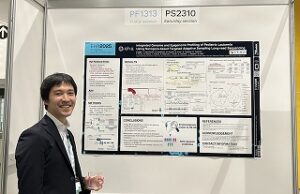
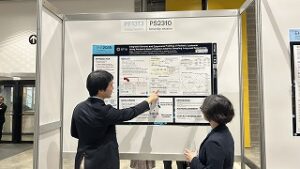
さて、私自身のポスター発表は「ナノポアシークエンサーで小児白血病の迅速かつ効率的なゲノム・エピゲノム統合解析系を構築してみた」という内容でした。ややマニアックな内容であることや、ポスターの場所も会場の一番端だったこともありすごくたくさん人が来たわけではないのですが、逆に私のポスターを見に来てくれる人は研究内容に興味を持ってくれている人やナノポアシークエンサーを使っているがあまりうまく行かず困っている人だったので、濃密な(オタクな)会話・議論ができて楽しく充実した時間を過ごせました。つたない英語ながら、自分の研究内容に興味を持って話を聞いてもらえるのはとても嬉しいものです。
少しだけ学会外のことをお話しすると、学会会場からミラノの中心部までは少し離れていましたが、地下鉄やトラムなどの公共交通機関がたくさんあり、また学会会場でこれらの交通機関の乗り放題チケットをいただけたので、学会会場から繁華街への移動はしやすかったです。ただ6月のミラノは非常に暑く、日中の屋外は半袖じゃないととても歩けたものではありませんでした。物価は日本より少し高いくらいでアメリカのようにびっくりすることはなく、ご飯はどこで食べても美味しかったです。「Coffee」と言うと濃〜いエスプレッソが出てくるのはイタリアならではです。今後ミラノの学会に参加される方の参考になれば幸いです。
最後に、今回のTravel grantの審査の労をとってくださった審査員の先生方および事務局の皆様、現地でお世話になった先生方、そして日々の研究遂行にあたりご指導いただいている東大小児科の皆様、特に直接の指導教官である加藤元博教授には改めて感謝申し上げます。