30th EHA Congress Travel Award 受賞レポート 山本 雄大
 jsh-izawa
名前:山本 雄大【佐賀大学医学部内科学講座血液呼吸器腫瘍内科】
発表形式:Poster
Title:
Degradation of IKZF1 via E3 ubiquitin ligase X by DNA demethylating agents is a potential therapeutic target for multiple myeloma
Authors:
Yuta Yamamoto1,2, Hiroshi Ureshino1,2, Tatsuro Watanabe1,2, Keisuke Kidoguchi1,2, Yuki Kurahashi2,3, Yuki Fukuda-Kurahashi2,3, Shinya Kimura1,2
Affiliations:
1. Division of Hematology, Respiratory Medicine and Oncology, Department of Internal Medicine, Faculty of Medicine, Saga University, Saga, Japan
2. Department of Drug Discovery and Biomedical Sciences, Faculty of Medicine, Saga University, Saga, Japan
3. OHARA Pharmaceutical Co., Ltd., Japan
Abstract:
Background: Multiple myeloma (MM) is characterized by uncontrolled proliferation of malignant plasma cells in the bone marrow. Although the prognosis of MM patients has improved markedly with the advent of various therapies, almost all patients eventually relapse and become refractory to treatment. Hence, MM is still considered an incurable disease, and there is a need to establish more effective therapies.
DNA methylation is an important epigenetic modification that regulates gene expression. Aberrant DNA methylation in promoter regions leads to the silencing of gene expression, a phenomenon observed in many cancers. Localized aberrant DNA methylation has been reported to be related for disease progression and drug resistance in MM. Hence, targeting aberrant DNA methylation presents a promising approach for the treatment of MM.
Aims: This study aimed to examine the efficacy of a new DNA demethylating agent, OR2100 which we developed as an orally bioavailable decitabine prodrug, on a multiple myeloma.
Methods: The MM cell lines used were IM9, KMS12BM, KMS11, and RPMI8226. Cell proliferation inhibition was measured using Cell Counting Kit-8. Gene expression was evaluated by qPCR and RNA sequencing. DNA methylation status was determined by bisulfite pyrosequencing.
Results: Physiological concentrations of OR2100 suppressed the growth and induced apoptosis of the MM cell lines dose dependent manner in vitro. OR2100 reduced DNA methylation levels of long interspersed nuclear element-1 (LINE-1), a surrogate marker for global DNA methylation status. Gene expression profiles by RNA sequencing showed increased expression of E3 ubiquitin ligase (X) levels in OR2100 treated MM cells. Treatment with OR2100 showed increased gene X expression in a dose-dependent manner without decreasing of ikaros family zinc Finger 1 (IKZF1) and cereblon (CRBN) gene expression levels by qPCR. Notably, the IKZF protein expression was reduced by OR2100 treatment. Knockdown of X reduced the OR2100-induced decrease in IKZF1 levels, suggesting that the reduction of IKZF1 by OR2100 may involve posttranscriptional degradation of the IKZF1 protein. Finally, the anti-tumor effect of OR2100 was evaluated using a xenograft MM mouse model for in vivo experiments. In the intravenous inoculation model, the vehicle group had a median survival of 75 days, whereas the OR2100 (3 mg/kg) group had a 1.5-fold survival benefit of 113 days and the OR2100 (4.5 mg/kg) group had a nearly 2-fold survival benefit of 145 days. Hematologic toxicity of OR2100 was tolerable over the experimental period, suggesting OR2100 may be a promising therapeutic strategy for MM.
Conclusion: We have demonstrated that DNA hypomethylation induced by OR2100 upregulates the E3 ubiquitin ligase X, leading to a decrease in IKZF1, a critical factor for the survival of myeloma cells, thereby exerting its antitumor effects. We are currently conducting a Phase I study of OR2100 for myelodysplastic syndrome (MDS), with the first step being to obtain approval for the treatment of MDS in Japan (jRCT2071220035), and we hope that OR2100 will be approved for the treatment of MM.
EHA2025参加レポート
この度は、JSH-EHA Travel Grant Program for EHA Congress 2025に採択いただき、誠にありがとうございました。今回のEHAは6月12日~6月15日にイタリアのミラノで開催され、私自身は2023年のドイツ・フランクフルトでのEHAにも参加したことがあったので、2年ぶりの参加となりましたが、今回も現地参加でき、大変有意義な時間を過ごすことができました。
ミラノの気候については、日本よりも気温が高かったものの、湿度が低いため過ごしやすく、日陰に入ると涼しさを感じるほどでした。学会自体はミラノコンベンションセンターで開催され、最新の血液学研究が一堂に会する場となりました。施設は広々としており、動線もスムーズで、セッション間の移動も快適でした。ポスター発表や口頭発表では、AI技術の応用や新規治療法に関する議論が活発に行われ、特にCAR-T療法の進展や骨髄腫に対する新しい治療戦略には多くの注目が集まっていました。

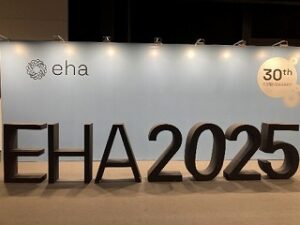
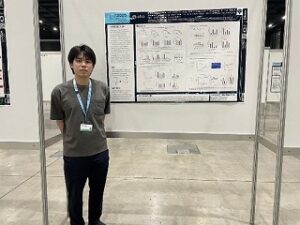
私自身は、DNA脱メチル化剤を用いた多発性骨髄腫に対する抗腫瘍効果に関する内容で演題を発表いたしました。私たちの研究室では、国立がんセンター、大原薬品工業などと共同で新規DNA脱メチル剤OR2100を開発中であり、これまで様々な造血器腫瘍に対する抗腫瘍効果を報告しています。今回の研究では、骨髄腫に対するOR2100の抗腫瘍効果を検証し、E3ユビキチンリガーゼの一種の脱メチル化作用を介してIKZF1の分解を促進することで抗腫瘍効果を示すこと、xenograftモデルを用いて、OR2100による治療は、ほとんど血液毒性を示すことなく、単剤でも十分な生存延長効果があることを確認しました。現在、骨髄異形成症候群(MDS)を対象としたOR2100の第1相臨床試験を実施しておりまして、まずはMDS治療薬としての承認取得を目指していますが、骨髄腫に対しても承認を目指して日々研究を続けております。

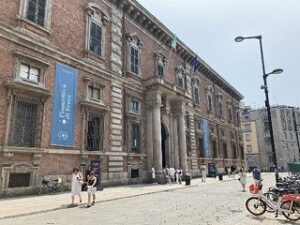
空いた時間には市内のフリーパスをいただけたので、ブレラ美術館やスフォルツェスコ城などを散策しましたが、街を歩いているだけでも石畳の道やクラシカルな建物が並んでおり、同じヨーロッパでもフランクフルトとはまた違った、自然豊かな街並みも堪能しました(スフォルツェスコ城では黒人の方数名に囲まれてミサンガの押し売りを受けたものの、なんとか脱出できました…)。また、現地のカフェやレストランでは、地元の方との交流や、本場のイタリア料理を楽しむことができ、非常に豊かな体験となりました。
最後になりましたが、このような貴重な機会を与えていただいた日本血液学会国際委員会の先生方、日本血液学会事務局のスタッフの方々に心より感謝申し上げます。また、ご指導いただきました木村晋也教授、嬉野博志先生をはじめ、研究にご協力いただいた創薬科学共同研究講座、大原薬品工業の皆様に深く御礼申し上げます。