30th EHA Congress Travel Award 受賞レポート 三村 海渡
 jsh-izawa
名前:三村 海渡【国立がん研究センター研究所がん進展研究分野】
発表形式:Oral
Title:
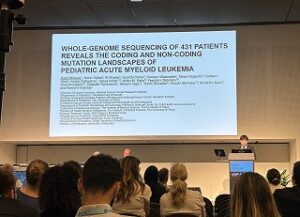
Whole-genome sequencing of 431 patients reveals the coding and non-coding mutation landscapes of pediatric acute myeloid leukemia
Authors:
Kaito Mimura, MD1, Norio Shiba, MD, PhD2, Ai Okada3, Kenichi Chiba, PhD3, Kentaro Watanabe, MD, PhD4, Takao Deguchi, MD, PhD5, Kentaro Ohki, MD, PhD6, Kotoe Katayama, PhD7, Seiya Imoto, PhD7,8, Akiko Saito, MD, PhD9, Yasuhiro Okamoto, MD, PhD10, Souichi Adachi, MD, PhD11, Daisuke Tomizawa, MD, PhD5, Takashi Taga, MD, PhD12, Yuichi Shiraishi, PhD3, Hiroshi Moritake, MD, PhD13, Motohiro Kato MD, PhD4, Kenichi Yoshida, MD, PhD1
Affiliations:
1 Division of Cancer Evolution, National Cancer Center Research Institute, Tokyo, Japan
2 Department of Pediatrics, Yokohama City University, Yokohama, Japan
3 Division of Genome Analysis Platform Development, National Cancer Center Research Institute, Tokyo, Japan
4 Department of Pediatrics, The University of Tokyo, Tokyo, Japan
5 Children's Cancer Center, National Center for Child Health and Development, Tokyo, Japan
6 Department of Pediatric Hematology and Oncology Research, National Center for Child Health and Development, Tokyo, Japan
7 Laboratory of Sequence Analysis, The Institute of Medical Science, The University of Tokyo, Tokyo, Japan
8 Division of Health Medical Intelligence, The Institute of Medical Science, The University of Tokyo, Tokyo, Japan
9 Clinical Research Center, Nagoya Medical Center, Nagoya, Japan.
10 Department of Pediatrics, Kagoshima University, Kagoshima, Japan
11 School of Human Health Sciences, Kyoto University, Kyoto, Japan
12 Department of Pediatrics, Shiga university of Medical Science, Otsu, Japan
13 Division of Pediatrics, University of Miyazaki, Miyazaki, Japan
Abstract:
Background: Pediatric acute myeloid leukemia (pAML) is one of the main causes of death in pediatric oncology. Most previous studies on the genetics of pAML were limited to specific genomic regions.
Aims: We aimed to elucidate both the coding and non-coding mutation landscapes of pAML by whole-genome sequencing.
Methods: As a part of Genome research in CAncers and Rare Diseases (G-CARD), a national project aiming to overcome cancer and rare/intractable diseases using whole genome analysis in Japan, we performed whole-genome sequencing on the tumor and matched normal samples from Japanese primary pAML patients enrolled in Japan Children’s Cancer Group (JCCG) AML-12/AML-D16 studies (n=95). Additionally, whole-genome sequencing data were obtained from the St. Jude Children’s Research Hospital – Washington University Pediatric Cancer Genome Project (Umeda et al. Nat. Genet. 2024) and St. Jude Cloud (McLeod et al. Cancer Discov. 2021). The datasets from a total of 431 patients were integrated and uniformly processed using the super-computing resource provided by the Human Genome Center (the University of Tokyo).
Results: Somatic mutations in protein-coding regions generally agreed previous reports. In addition, new driver gene candidates such as DNM2, SI, TGM6, FBXL7, FAM8A1 were recurrently mutated. In non-coding regions, accumulation of somatic mutations was found in intronic (n=66) and intergenic (n=56) regions, including those in proximity to oncogenes and tumor-suppressor genes reported to drive AML. This included the TERT promoter region, which was affected by 4 canonical hotspot single-nucleotide variations and 1 structural variation (n=5), which is unusual for hematological malignancies.
Structural variation (SV) analysis detected defining chromoromal rearrangements such as translocations involving RUNX1 (n=68) and KMT2A (n=79), besides novel recurrent SVs, including tandem duplications in the ‘Blood enhancer cluster’ (Bahr et al. Nature 2018, n=11), locating in the downstream of MYC. One patient had a complex rearrangement, chromoplexy, involving a RAG1/2-associated deletion in TCRδ region and RUNX1-RUNX1T1 translocation. This indicated coincidence of aberrant RAG1/2-associated double-strand breaks (DSBs) in the TCRδ region and non-RAG1/2-associated DSBs in RUNX1 and RUNX1T1 regions, suggesting that abberrant V(D)J-recombinations may occur before the emergence of the driver fusion gene RUNX1-RUNX1T1.
Mutational signatures were detected using SigProfiler (Islam et al. Cell Cenom. 2022). Clock-like signatures, namely SBS1 and SBS5, were ubiquitously detected in our cohort, and mutational burden was associated with age (p=8.059e-09 for SBS1, p=1.134e-06 for SBS5). In AMLs with RUNX1-RUNX1T1 and CBFB-MYH11, a reactive oxygen species (ROS)-related signature, SBS18, contributed to a significant number of somatic mutations, with association with age (p=0.02177). This observation indicated that SBS18 mutations accumulated at a consistent rate from birth to the onset of the disease, and supported the in utero origin of t(8;21) translocations (Wiemels et al. Blood 2002). The frequencies of SBS18 mutations were similar between clonal and subclonal mutations, indicating that the mutational process mediated by ROS contributed to the entire process of clonal evolution of such AML subtypes.
Summary/Conclusion: By whole-genome sequencing of 431 pAML patients, novel mutational events throughout the genome including the non-coding regions were detected.
EHA2025参加レポート
この度はJSH-EHA Travel Grant Program for EHA2025に選出いただき感謝申し上げます。今年のEHAはイタリアはミラノで開催されました。会期中は天気に恵まれ、連日30度を超える暑さでしたが、美しい街並みを眺めながら学会会場へ向かう道のりは、毎日の楽しみでもありました。
今回の学会の雰囲気としては、特に臨床研究に重点が置かれている印象を受けました。プレナリーセッションでは血液疾患の新規治療法に関する刺激的な発表をいくつも聞くことができました。Molecular Hematopoiesis WorkshopやLymphoid Biology & Malignancy Workshopなどのワークショップ系セッションでは短時間で多数の基礎研究の最新の知見に触れる貴重な機会を得ました。その他、興味のある基礎系のオーラルセッションやシンポジウムを回りましたが、AMLのエピジェネティクスに関するセッション、Fanconi貧血を含む骨髄球系腫瘍のgermline predispositionに関するセッションなど多くの面白く興味深い発表を聞けました。2日目、3日目の終わりに行われたポスターセッションでは、その圧倒的な発表数に驚かされました。会場を歩き回る中で、事前にマークしていなかった衝撃的な研究に偶然出会うなど、In-personでの参加のメリットを享受しつつ、おつまみや飲み物をいただきながら海外の発表者の方々と研究について議論する時間はとても刺激的で実りの多いものでした。
今回、初めて国際学会でのオーラル発表に採択されたため、発表内容がうまく伝わるか、質疑応答に対応できるか不安でしたが、学会前や会期中の会食の機会において、同僚や共同研究者の先生方より貴重なアドバイスをいただき、準備を進めることができました。
私自身は3日目の夕方のオーラルセッションで小児AMLの全ゲノム解析に関する研究を発表しました。本研究では、AML12/AML-D16 studyから得られた95例と公開データセットから取得した336例、計431例の小児AMLを対象とした全ゲノム解析を実施しました。さらに、全ゲノム解析で同定した新規病変を対象に設計したターゲットパネルシークエンスにより472例の小児AMLを追加解析し、今後追加する予定の症例を含めると903例以上と、小児AMLとしては世界最大級の次世代シークエンス研究となっているところが一つの見どころです。新規ドライバー因子の候補に加えて、小児AMLでは報告の少ないTERTプロモーター変異が多数症例で検出されたこと、CBF-AMLにおいて活性酸素種による変異シグネチャSBS18が特徴的に観察されること、AMLにおけるT細胞受容体の構造異常がドライバー遺伝子の出現に先行する可能性を示唆する症例について報告しました。
質疑応答では、フロアよりT細胞受容体のくだりに興味を持って質問をしていただけたり、セッション終わりにも外国の研究者が話しかけてくださったりと、国際的な場で研究を発表することの意義と反響の大きさを実感しました。発表時の緊張感や質疑応答の経験は、実際にその場に立たなければわからない貴重な学びであり、とてもいい経験になりました。
最後に、このような貴重な機会を提供してくださいました日本血液学会および欧州血液学会,日頃から研究のご指導をいただいている吉田健一先生、ならびに臨床・解析を含む多方面にわたり研究に貢献いただいた共同研究者の先生方、研究室の皆さまに、この場を借りて深く感謝申し上げます。